A dining room corner is one of the most overlooked spots in a home. It often holds a plant that needs water or a chair nobody sits in. But that same corner can become the best part of your dinner parties. You do not need a big budget or a construction crew. You need a clear plan and a willingness to use the space you already have.
This article walks through how to turn a small dining room corner into a home bar that looks good and actually works. Every idea here is built for tight spaces. Nothing requires a dedicated room.
Start With the Space You Already Have
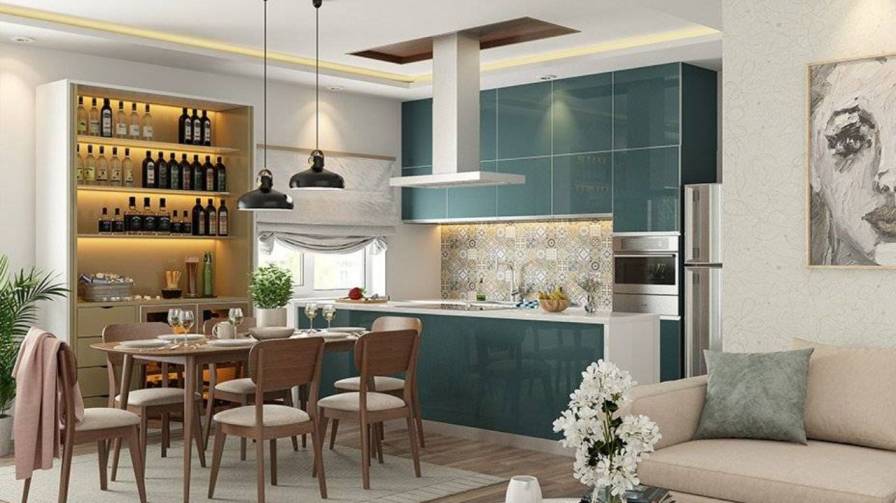
Before you buy a single bottle or shelf, look at your corner with honest eyes. Measure the width from wall to wall. Measure how deep the corner goes. Then ask yourself one question: how many people do I actually host at once?
The answer shapes everything. For two to four guests, a single small surface is enough. You do not need a full counter. You do not need a sink. You need a flat spot for bottles, a place for glasses, and a bit of room to set down a shaker.
A dining room corner works well for a simple reason. Drinks stay close to where people sit and eat. You are not running to the kitchen every time someone wants a refill. The bar becomes part of the meal instead of a separate task.
If your corner is truly tiny, a bar cart is the lowest-risk choice. It rolls in when you need it and rolls out when you do not. If you have a bit more room, a narrow console or a wall-mounted shelf gives you more surface without eating floor space.
Read Also: Home Bar Checklist For Beginners
The Bar Cart: Small, Moveable, and Forgiving
A bar cart is the easiest way to start. It holds what you need, it moves where you need it, and it does not demand a permanent spot. Designers often suggest a rolling cart for dining room corners because it can be tucked away when the room needs to serve another purpose and small home bar ideas for dining room corner.
The key is to choose a cart with two tiers and wheels that roll smoothly. A brass or matte black frame with glass or marble shelves fits most dining rooms without fighting the existing furniture. Keep the size modest. A cart that is too wide will crowd the corner and make the dining table feel tight.
What goes on the cart matters more than the cart itself. The top shelf should hold what you reach for most: two or three bottles you actually drink, a small tray for tools, and the glasses you use every week. The bottom shelf can hold backup bottles, a stack of napkins, or a small ice bucket.
One mistake people make is overloading the cart. A tidy cart with five bottles looks better than a cluttered cart with fifteen. If you do not drink it regularly, it does not belong on the cart. Store the extras in a cabinet.
A Wall Niche or Floating Shelf Setup
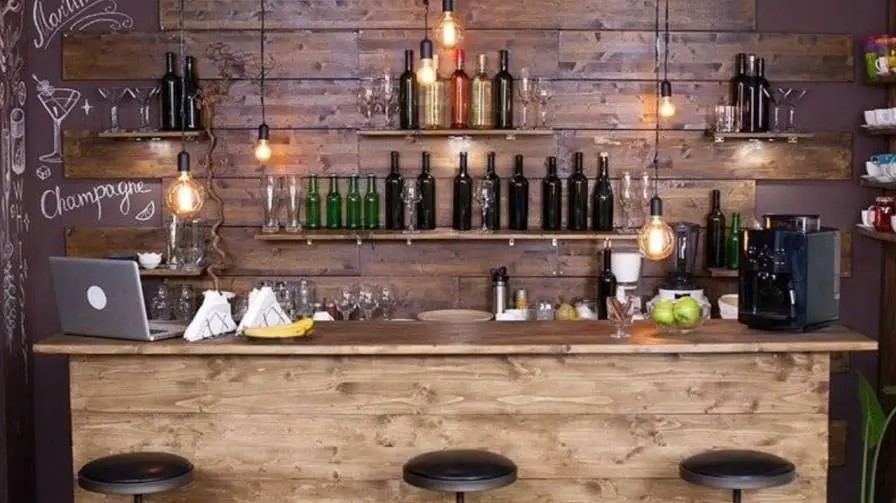
If your corner has a wall you can use, a shallow niche or a set of floating shelves takes up almost no floor space. This is the most popular small-space bar approach for a reason: it uses vertical room instead of horizontal room.
You do not need to cut into the wall. A simple set of two or three floating shelves in the corner, mounted above a small console or even above the floor, creates a bar zone. The shelves hold bottles and glassware. The surface below holds the tools and the mixing space.
The visual trick here is to treat the corner as a display. A mirror behind the shelves makes the space feel twice as large and reflects light back into the dining room. Warm LED strips under each shelf make bottles glow instead of sitting in shadow. These small choices cost little but change how the corner feels at night.
For the shelves themselves, keep the styling simple. One shelf for bottles. One shelf for glasses. One shelf for a small plant or a framed print if you want personality. Do not fill every inch. Empty space on a shelf is not wasted space. It is what keeps the corner from looking like a storage closet.
Lighting Makes or Breaks a Corner Bar
A dark corner feels like a forgotten corner. A lit corner feels intentional. This is the single most important detail for a small dining room bar, and it is also the one people skip.
You have three simple options. The first is under-shelf LED strips. They are cheap, they stick on, and they make glass and bottles catch the light in a way that overhead lighting never does. Choose a warm white, around 2700K to 3000K, so the corner feels like a lounge instead of an office.
The second option is a small wall sconce or a plug-in picture light above the bar. This gives you a focused pool of light right where you mix drinks. It also adds a decorative element without taking up surface space.
The third option is a mirror. A mirror does not create light, but it doubles whatever light you already have. Placed behind a bar cart or shelves, it makes the corner read as a bigger, brighter part of the room. This is especially useful in dining rooms that only get evening use.
What to Keep on the Bar (and What to Leave Out)?
A home bar is not a liquor store. You do not need every bottle. You need the bottles that make the drinks you actually like.
Start with three base spirits that cover most simple cocktails. Vodka, gin, and whiskey are a practical trio for a small setup. Add a bottle of rum or tequila only if you drink them. For mixers, keep tonic, soda, and a small bottle of fresh citrus juice in the fridge nearby. A bowl of lemons and limes on the bar itself adds color and function at the same time.
For tools, four items cover almost everything: a shaker, a jigger for measuring, a strainer, and a bottle opener. You do not need a fifteen-piece kit. You need tools that work and a place to put them. A small tray or a shallow bowl keeps the tools together and makes the bar look organized even when it is not perfectly tidy.
Glassware is where a small bar can get crowded fast. Keep two types on the bar: a set of short glasses for whiskey and mixed drinks, and a set of tall glasses for highballs and soda. Wine glasses can live in the kitchen cabinet if space is tight. You do not need to display everything you own.
You May Also Like: Small Home Bar Ideas For Hosting Guests
Making It Feel Like a Bar, Not a Shelf
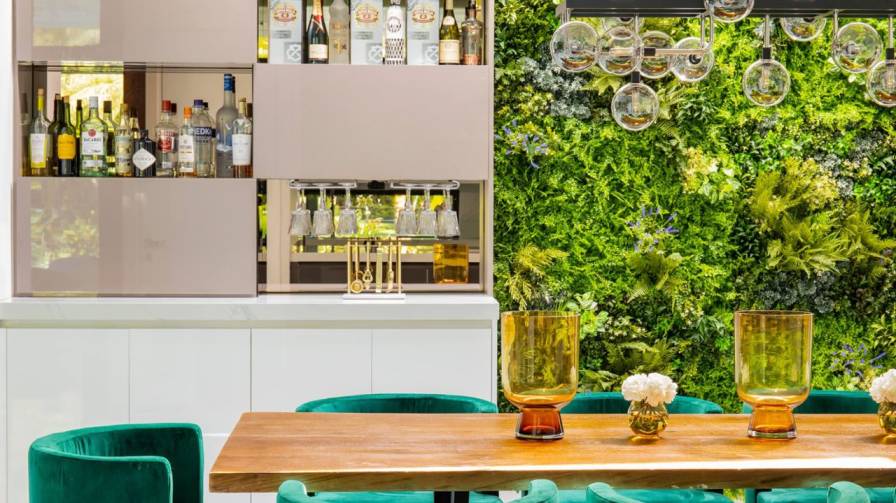
The difference between a shelf with bottles on it and a bar is intention. A bar looks like someone thought about it. That thought shows up in small details.
A tray is one of the simplest upgrades. Put your bottles and tools on a tray and the whole setup instantly reads as a deliberate station instead of a collection of objects. A vintage tray, a marble one, or even a simple wooden board works. The tray also makes cleanup easy: lift it, wipe the surface, put it back.
A small plant or a few stems in a vase adds life to a corner that might otherwise feel flat. A framed print or a postcard propped against the wall gives the bar personality without taking up surface space. A nice ice bucket, even if you only use it when guests come over, signals that this corner is meant for hosting.
The goal is not to decorate a bar. The goal is to make the corner feel like a place where someone would want to stand and make a drink. That feeling comes from a few thoughtful objects, not from a lot of them.
Final Thought
A dining room corner bar works because it asks very little of your home. It does not need a new room. It does not need plumbing or a contractor. It needs a surface, a few bottles, a light, and a bit of care.
Start with what you have. A cart you already own. A shelf that is not being used. A corner that has been waiting for a reason to exist. Add one thing at a time: the bottles you drink, the glasses you reach for, a light that makes the corner glow at night. The bar will grow into the space, and the space will start to feel like it was always meant for small home bar ideas for dining room corner.